AI DraftOct 20, 2026
Echoes of Eternity + Ulalek, Fused Atrocity + Writhing Chrysalis
AI draft — not yet human-reviewed. Check citations and flag anything that looks wrong. How pages are reviewed.
Overview
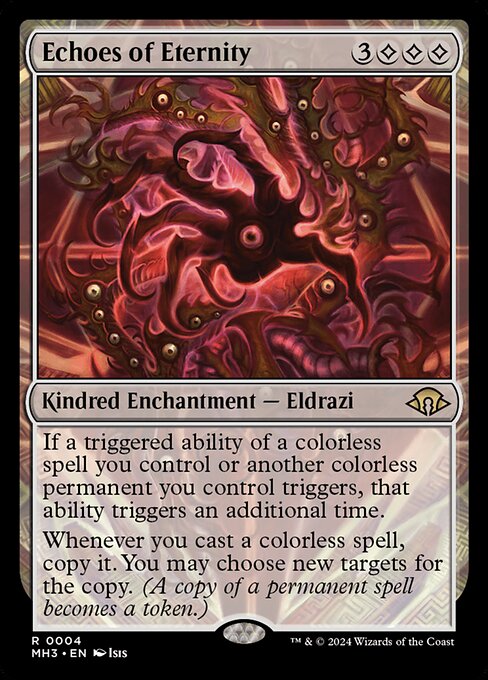
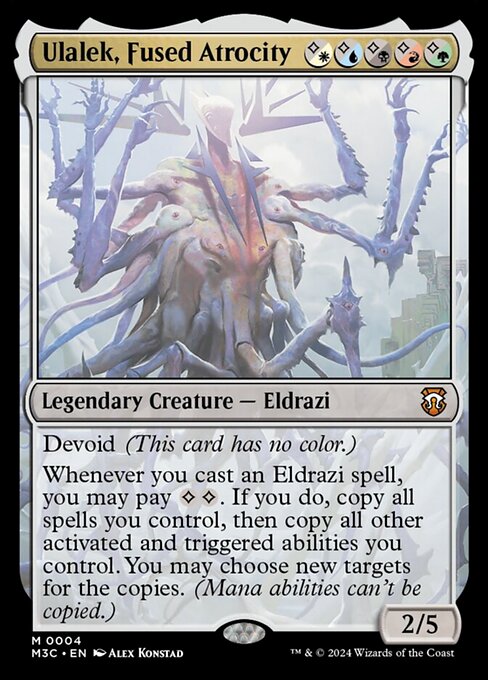
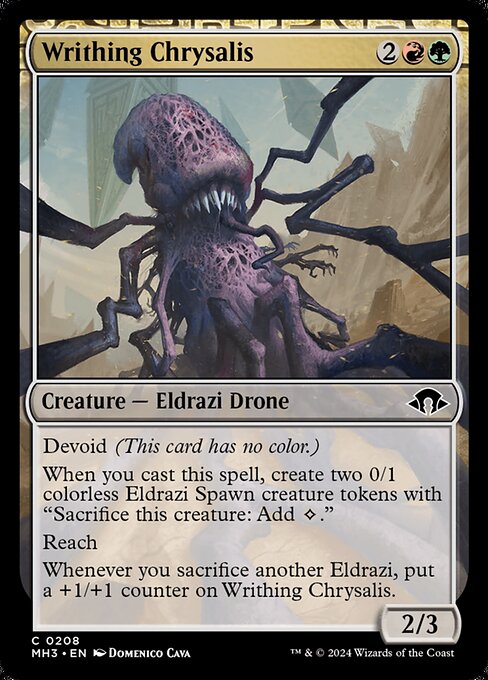
When you cast Writhing Chrysalis (a colorless Eldrazi) while you control Echoes of Eternity and Ulalek, Fused Atrocity, three things happen at cast time: Echoes’ “copy it” trigger will trigger, Ulalek’s Eldrazi-cast trigger will trigger, and Chrysalis’s own “When you cast this spell” trigger will trigger — Echoes also makes Chrysalis’s triggered ability trigger an additional time because it’s a triggered ability of a colorless spell you control. Triggers are put on the stack after the spell is cast and will be put on the stack in the usual way for multiple triggers . If/when Ulalek’s triggered ability resolves and you choose to pay its  cost (an optional cost paid on resolution) , it first copies all spells you control and then copies all other activated and triggered abilities you control; copying spells and abilities puts copies onto the stack . Copies of the Chrysalis spell that are created by effects (Echoes or Ulalek copying spells) are put onto the stack but are not cast, so they do not themselves cause “When you cast this spell” triggers . Copies of the Chrysalis’s triggered abilities that exist on the stack at the time Ulalek resolves can be copied by Ulalek’s second step, producing additional triggers on the stack .
cost (an optional cost paid on resolution) , it first copies all spells you control and then copies all other activated and triggered abilities you control; copying spells and abilities puts copies onto the stack . Copies of the Chrysalis spell that are created by effects (Echoes or Ulalek copying spells) are put onto the stack but are not cast, so they do not themselves cause “When you cast this spell” triggers . Copies of the Chrysalis’s triggered abilities that exist on the stack at the time Ulalek resolves can be copied by Ulalek’s second step, producing additional triggers on the stack .Step 1
You announce and cast Writhing Chrysalis (a colorless Eldrazi). After the casting steps finish, triggered abilities that watch 'you cast' a spell are created .
Step 2
Triggers created include: (A) Echoes of Eternity’s ‘Whenever you cast a colorless spell, copy it’ trigger; (B) Ulalek’s ‘Whenever you cast an Eldrazi spell, you may pay ...’ trigger; and (C) Writhing Chrysalis’s own ‘When you cast this spell, create two 0/1 Eldrazi Spawn’ trigger. Because Chrysalis is a colorless spell, Echoes also makes Chrysalis’s triggered ability trigger an additional time (so there are two instances of Chrysalis’s trigger) (Echoes text).
...’ trigger; and (C) Writhing Chrysalis’s own ‘When you cast this spell, create two 0/1 Eldrazi Spawn’ trigger. Because Chrysalis is a colorless spell, Echoes also makes Chrysalis’s triggered ability trigger an additional time (so there are two instances of Chrysalis’s trigger) (Echoes text).Step 3
The controller orders those triggered abilities on the stack in the usual way. The order chosen determines what exists on the stack when each trigger resolves .
Step 4
If Echoes’s copy-trigger resolves before Ulalek’s trigger: Echoes creates a copy of the Chrysalis spell and puts that copy onto the stack. That copy is not cast, so it does not itself cause any 'When you cast this spell' triggers .
Step 5
When Ulalek’s trigger resolves, if you choose to pay (that choice is a cost paid on resolution) , Ulalek will first copy all spells you control at that moment (putting copies of any Chrysalis spells on the stack; those copies aren’t cast) and then copy all other activated and triggered abilities you control (it will see the Chrysalis triggers that are currently on the stack — including the doubled instances from Echoes — and put copies of those triggered abilities onto the stack) .
(that choice is a cost paid on resolution) , Ulalek will first copy all spells you control at that moment (putting copies of any Chrysalis spells on the stack; those copies aren’t cast) and then copy all other activated and triggered abilities you control (it will see the Chrysalis triggers that are currently on the stack — including the doubled instances from Echoes — and put copies of those triggered abilities onto the stack) .Step 6
Each copy of Chrysalis’s triggered ability that ends up on the stack (original triggers and any copies from Ulalek’s copy-abilities step) will resolve and create the indicated tokens as written.
Step 7
If Ulalek resolves before Echoes’s copy-trigger, Ulalek will copy fewer spells (it copies only the spells you control at that moment) and will copy the triggered abilities that are present at that moment; Echoes’s copy and its timing will then occur later and produce a spell-copy that was not cast and thus never produced 'When you cast' triggers.
Resolution
Practical outcome depends on the order the relevant triggers are put on and resolve. The consistent rules points are: Chrysalis’s “When you cast this spell” ability will be created twice because Echoes causes a triggered ability of a colorless spell you control to trigger an additional time. Echoes’s own “Whenever you cast a colorless spell, copy it” trigger will (if allowed to resolve) put a copied Chrysalis spell onto the stack, but that copy was not cast and therefore won’t generate a “When you cast this spell” trigger. Ulalek’s triggered ability, if its controller pays when it resolves (that payment is an optional cost paid on resolution) , will (1) copy all spells you control at that moment (putting spell-copies onto the stack; those copies aren’t cast) and then (2) copy all other activated and triggered abilities you control (putting ability-copies onto the stack) . Any Chrysalis “When you cast this spell” triggered abilities that already exist on the stack at the moment Ulalek copies abilities will be copied as separate triggered-ability copies , and those copies will resolve and create tokens as written. Therefore, if you let Echoes’ copy resolve before Ulalek resolves, Ulalek can copy both the original Chrysalis spell and Echoes’s copy when it does its “copy all spells” step; Ulalek will also copy any Chrysalis triggers on the stack when it does its “copy abilities” step, so you can end up with multiple extra spawn-creating triggers. If Ulalek resolves before Echoes’s copy trigger resolves, Ulalek will copy fewer spells and possibly fewer triggers. Remember that a copy of a spell that’s in a zone other than the stack ceases to exist and copies are not cast .
when it resolves (that payment is an optional cost paid on resolution) , will (1) copy all spells you control at that moment (putting spell-copies onto the stack; those copies aren’t cast) and then (2) copy all other activated and triggered abilities you control (putting ability-copies onto the stack) . Any Chrysalis “When you cast this spell” triggered abilities that already exist on the stack at the moment Ulalek copies abilities will be copied as separate triggered-ability copies , and those copies will resolve and create tokens as written. Therefore, if you let Echoes’ copy resolve before Ulalek resolves, Ulalek can copy both the original Chrysalis spell and Echoes’s copy when it does its “copy all spells” step; Ulalek will also copy any Chrysalis triggers on the stack when it does its “copy abilities” step, so you can end up with multiple extra spawn-creating triggers. If Ulalek resolves before Echoes’s copy trigger resolves, Ulalek will copy fewer spells and possibly fewer triggers. Remember that a copy of a spell that’s in a zone other than the stack ceases to exist and copies are not cast .Feedback